Southeast Asia e-commerce 2026: behind the $157.6B GMV, where are the warehousing opportunities?
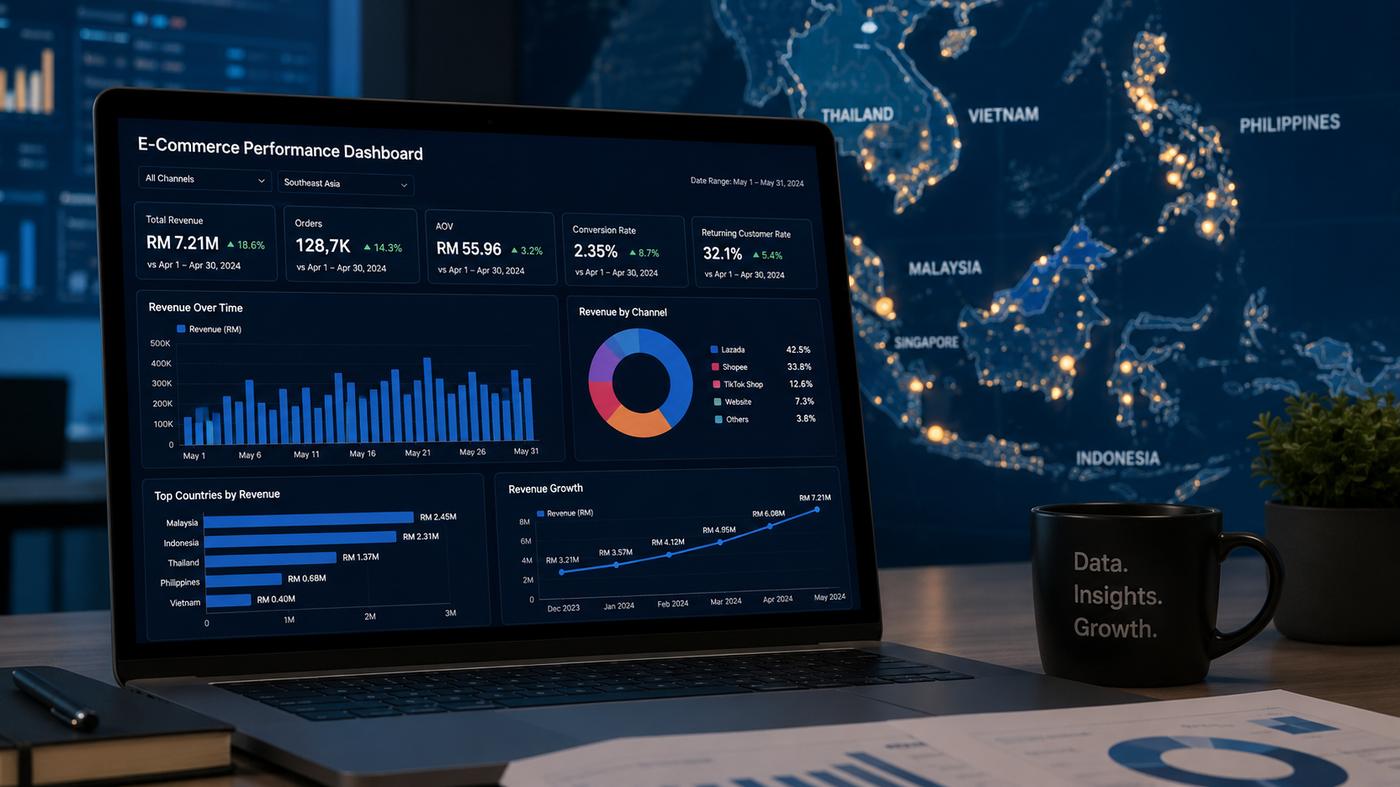
Southeast Asia's platform e-commerce GMV reached US$157.6 billion in 2025, up 22.8% year-on-year. Shopee and TikTok Shop are fighting harder than ever. Content commerce now accounts for 32% of GMV. Here's what the numbers mean for the warehouses behind the orders.
According to Momentum Works' April 2026 report, Southeast Asia's platform e-commerce GMV reached US$157.6 billion in 2025, up 22.8% year-on-year — nearly tripling from 2020. The top three platforms (Shopee, TikTok Shop incl. Tokopedia, and Lazada) now account for 98.8% of total platform GMV, a highly concentrated market.
$157.6B
2025 Platform GMV
+22.8%
YoY growth
98.8%
Top 3 market share
$49.7B
Content commerce GMV (32%)
$7.3B
Quick commerce GMV
$410B
2030 GMV Forecast
II. Platform Landscape: A Two-Horse Race Reshaping the Market
Shopee remains the clear leader, but TikTok Shop is closing the gap faster than expected. TikTok Shop's GMV grew from $4.4B in 2020 to $45.6B in 2025 — more than 10x in five years, with growth still running at 40–55% annually.
Shopee
52%
~$82B
TikTok Shop
29%
~$46B
Lazada
10%
~$16B
Others
9%
~$14B
Source: Momentum Works, E-commerce in Southeast Asia 2026; full-year 2025 GMV
Lazada continues to face market share erosion, accelerating its strategic retreat to focus on higher-margin categories and direct brand partnerships through LazMall. The three-platform structure is evolving into a two-horse race in practice.
III. Country Markets: Growth Rates Diverge Significantly
Market
2025 GMV
Regional share
YoY growth
🇮🇩 Indonesia
~$65B
41%
+22%
🇹🇭 Thailand
~$28B
18%
+21.7%
🇻🇳 Vietnam
~$24B
15%
+18–25%
🇵🇭 Philippines
~$21B
13%
+23%
🇲🇾 Malaysia
~$16B
10%
+19.5%
🇸🇬 Singapore
~$9B
6%
+12%
Indonesia is the anchor market with the largest absolute GMV. The Philippines and Vietnam lead on growth rate — currently the most active incremental markets. Thailand balances scale with growth momentum, making it the most attractive combination of maturity and upside.
IV. Four Structural Trends Reshaping the Market
📱
Content commerce is the biggest growth engine
Content commerce (live shopping + short video commerce) generated $49.7B GMV in 2025, representing 32% of total platform GMV — up sharply from 20% in 2024. TikTok Shop is the primary driver. This means a large and growing share of orders are "unplanned" purchases made in content moments, concentrated in time spikes (live peaks), placing extreme demands on warehouse surge capacity.
⚡
Quick commerce is entering its growth phase
Southeast Asia's quick commerce GMV reached $7.3B in 2025, just 4.6% of total e-commerce GMV, but growing at 28%+ annually — one of the fastest-growing sub-segments. Consumer acceptance of 2-hour and same-day delivery continues to rise, driving platforms and brands to invest in urban warehouse networks. Dark store models are expanding rapidly in Bangkok, Jakarta, and Ho Chi Minh City.
🏭
Platforms building in-house logistics, pressuring 3PLs
Shopee's SPX Express now handles over 50% of platform orders, with 90% same-day delivery in Singapore. TikTok Shop is accelerating its proprietary logistics infrastructure at 43.6M parcels per day. For traditional 3PLs, the signal is clear: "store and ship" is no longer enough to retain clients — digitalization, system integration, and data visibility are becoming the core 3PL differentiators.
🌏
Cross-border e-commerce accelerating — regional warehouse networks become critical
Cross-border e-commerce within Southeast Asia continues to grow rapidly, with Chinese and Korean brands accelerating multi-country warehouse deployment to achieve 3-day regional delivery. Progress on ASEAN customs mutual recognition is lowering compliance barriers for cross-border warehousing. For brands entering the market, single-country warehousing is giving way to regional hub networks — anchor warehouses in strategic markets serving neighboring countries.
V. What This Means for Warehouse and Logistics Operators
Drawing from the market data above, several concrete conclusions emerge for warehouse and logistics operators:
Live peak loads are the new normal, not the exception. Content commerce jumping from 20% to 32% of GMV means warehouses now face multiple surge events every week, not just during campaigns. Wave management, flexible labor, and system concurrency capacity must be standard configurations, not premium features.
Multi-platform integration is table stakes. Shopee + TikTok Shop together control over 80% of market share. Nearly every meaningful seller operates across both. A warehouse that can't handle multi-platform order ingestion and unified cross-platform inventory management will generate continuous errors in allocation and stock coordination.
Southeast Asia e-commerce is projected to reach $410B by 2030. That growth ultimately lands on warehouse shelves, inside WMS order queues, and in the hands of delivery drivers. The earlier you build the capability, the larger share of that growth you capture.
Flash WMS view: Southeast Asia e-commerce is entering high-speed maturation, with platform concentration, content-driven traffic, and in-house logistics all accelerating simultaneously. For 3PLs and brands, the question is no longer "whether to digitalize" — it's "how fast can you complete the transition." Warehouses that can integrate platforms in real time, handle surge loads, and output operational data will capture a disproportionate share of market growth over the next 3–5 years.