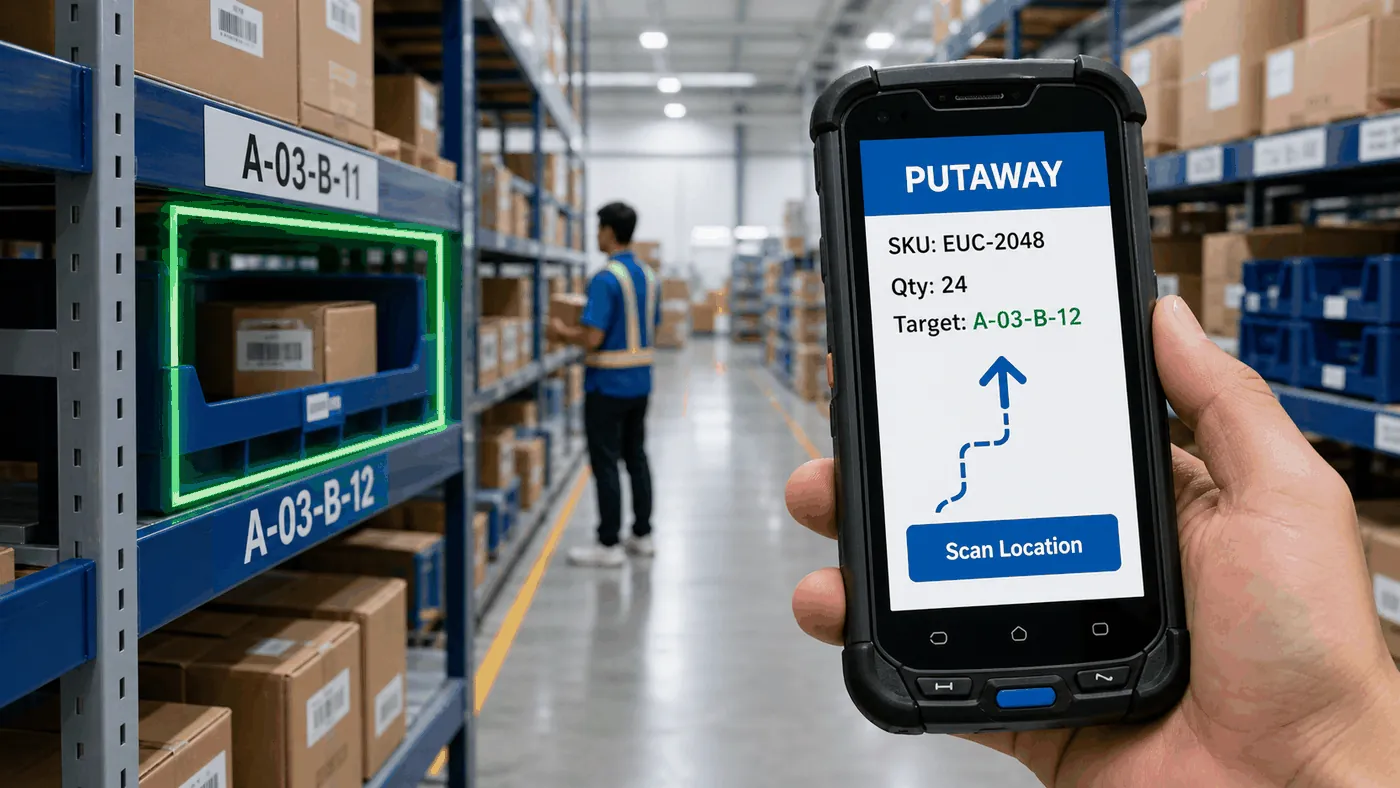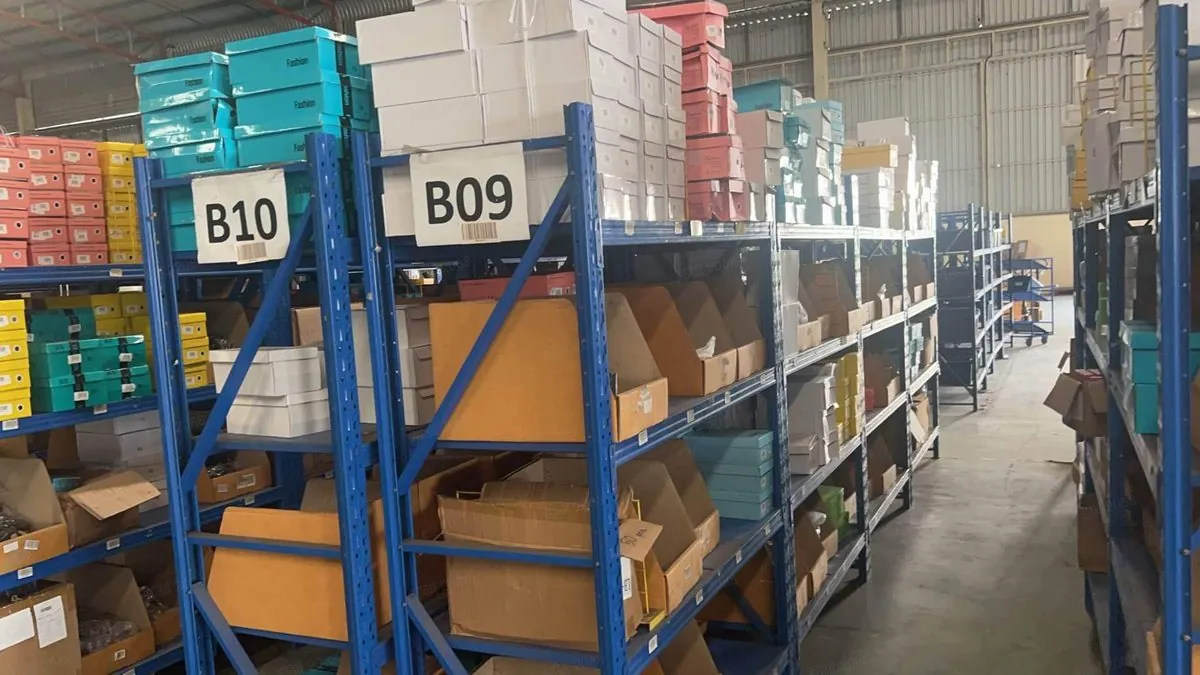
Location planning is the foundation of stable warehouse operations. Most warehouses become more chaotic under load not because of staffing, but because the placement of goods is itself generating disorder.
Step 1
SKU Classification
Classify SKUs by sales velocity into A / B / C / D:
- A — High velocity → determines efficiency
- B — Steady → sustains daily operations
- C / D — Low velocity → control space usage
Core principle: different velocity, different location.
Step 2
Define zones
Not by floor area — by operational logic:
- Pick zone: high-frequency outbound
- Storage zone: bulk stock
- Staging zone: receiving & replenishment buffer
- Exception zone: problem orders
Step 3
Fix locations
Every SKU must have a fixed pick location and a fixed replenishment source.
❌ "Put it wherever there's space" is not allowed.
Step 4
Match location type to SKU
Assign by velocity + physical size:
- Large, high-velocity → pallet position
- Small, high-velocity → bin / shelf
- Low-velocity → storage zone
Step 5
Define replenishment rules
Must define explicitly:
- When to replenish (below safety stock)
- How much (3–5 days of stock)
- How (storage → staging → pick)
Every step requires a scan.
Step 6
System-enforced execution
- Put-away: system assigns the location
- Replenishment: system specifies the route
- Picking: follows the system's location sequence
No scan = no completion.
The purpose of location planning: give inventory a home, give actions a constraint, make the process executable.